This review is based on our personal experience using the OTS Guardian Full Face Mask. We purchased and used the mask ourselves; this is not a sponsored review.
After spending time diving with the OTS Guardian Full Face Mask, our overall experience has been very positive. It has been a great mask for us, offering a comfortable full-face design, a wide field of view, and the reassuring feeling of breathing through both the nose and mouth while underwater.
Like any piece of life-support equipment, however, it must be assembled and checked carefully. We did experience one issue when Kristal’s air line popped off because the connection had not been completely locked down. The mask itself did not fail, but the incident gave us an important reminder: every connection must be fully seated, locked, and checked before entering the water.
What Is the OTS Guardian Full Face Mask?
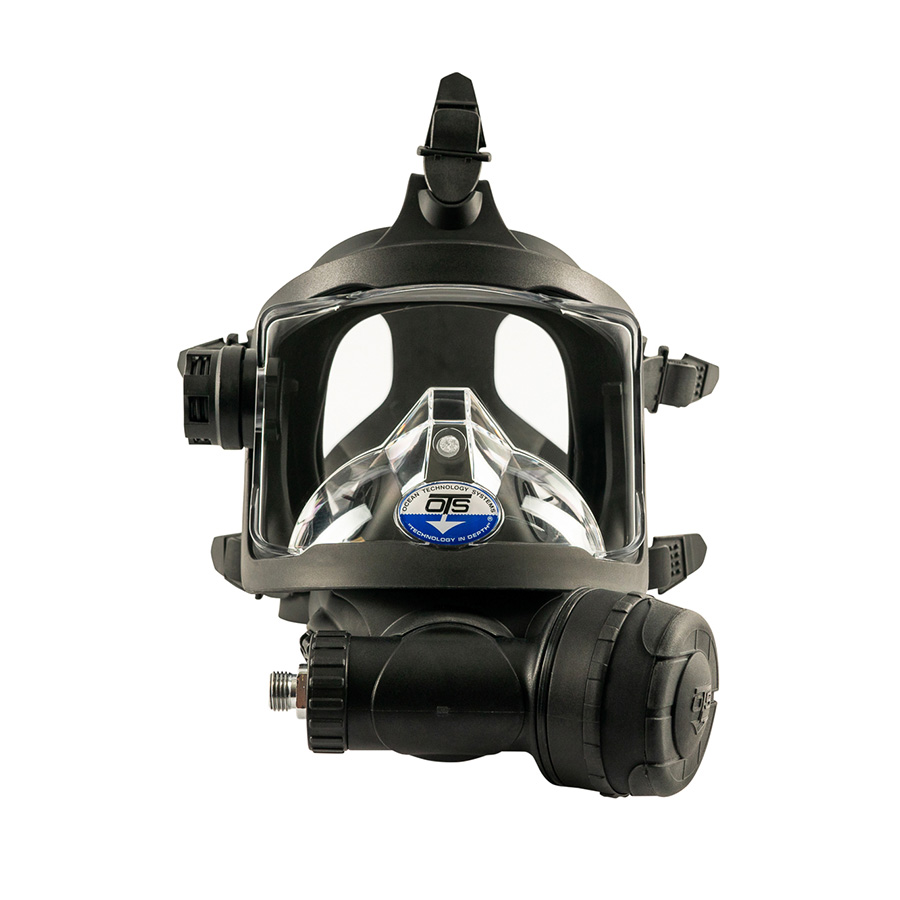
The Guardian is a full-face diving mask designed for recreational, public-safety, military, and professional applications. Instead of using a separate traditional mask and regulator mouthpiece, it seals around the entire face and incorporates the second-stage regulator into the mask.
According to Ocean Technology Systems, the Guardian uses a one-piece double-sealed silicone skirt, a customizable equalizing block, a removable second stage, a standard low-pressure scuba hose, and a visor designed to remain fog-free without defogging solution. It also includes a communications port for compatible OTS equipment.
Our Experience With the Guardian
The best summary is simple: it has been a great mask. Once it is adjusted correctly, the full-face seal feels secure and comfortable. Being able to breathe naturally through the nose or mouth is one of the biggest differences compared with a conventional regulator, and the large visor provides an open view underwater.
The mask also protects more of the face from the water. That can be especially appealing in colder water or during dives where comfort and communication are priorities.
It does require more preparation than grabbing a conventional mask and second stage. Strap adjustment, equalization setup, hose connections, and emergency procedures all deserve attention. A full-face mask is not equipment we would recommend using for the first time without proper instruction and controlled practice.
The Air-Line Incident: What We Learned
We had one occasion when the air line going to Kristal’s mask popped off. After looking at what happened, we determined that the connection had not been completely locked down. This was a connection and setup issue—not a failure of the Guardian mask itself.
Still, an air connection coming loose is serious. It changed our pre-dive routine and reinforced several habits:
- Push the connection fully into place.
- Confirm that the locking mechanism is completely engaged.
- Visually inspect the connection.
- Give the connected hose a gentle tug to confirm it is secure.
- Turn on the air and test-breathe before entering the water.
- Make sure the hose is routed without tension that could pull on the connection.
- Practice the manufacturer-taught emergency procedures with qualified instruction.
This is a good example of why equipment checks should be deliberate, even with familiar gear. A component can appear connected without being fully locked.
Pros
- Comfortable full-face seal: The double-seal silicone skirt provides a secure fit and is designed to accommodate a wide range of face shapes.
- Natural breathing: Being able to breathe through the nose or mouth can feel more relaxed than holding a standard regulator mouthpiece.
- Wide field of view: The large visor gives the diver an open, less confined view underwater.
- Reduced fogging: Air circulation across the visor helps keep it clear without relying on traditional defogging products.
- Better facial protection: The mask keeps the eyes, nose, and mouth isolated from the surrounding water.
- Customizable equalization: The adjustable equalizing block can be configured to make nose equalization more comfortable.
- Communications-ready: The built-in communications port allows compatible OTS communication equipment to be added.
- Serviceable design: The removable second stage makes cleaning and storage more manageable.
- Standard LP hose: OTS specifies that the mask uses a standard low-pressure scuba hose.
- Optional surface-air conservation: An ambient breathing valve can allow breathing surrounding air at the surface instead of using tank gas.
Cons
- Connections require careful verification: As our experience showed, a connection that is not fully seated and locked can come loose.
- More training is necessary: Clearing, removing, replacing, switching to backup air, and handling emergencies differ from conventional-mask procedures.
- More pre-dive setup: The straps, equalizing block, hose, regulator, and any communications equipment must be checked.
- Bulkier than conventional gear: The mask takes up more room in a dive bag and requires thoughtful protection during travel.
- Buddy familiarity matters: A buddy should understand the equipment and know how to respond during a problem.
- Equalization may take adjustment: The equalizing block must be fitted correctly for the individual diver.
- Cleaning and maintenance are important: The larger sealing surface, visor, regulator, valves, and connections need proper care.
- Higher cost: A quality full-face mask and any communications accessories represent a larger investment than a conventional mask-and-regulator setup.
Who Is It Best For?
The Guardian is a strong option for trained divers who value full-face comfort, facial protection, a broad view, or the ability to add underwater communications. It can make sense for recreational divers as well as public-safety, scientific, instructional, and working-diver applications.
It may not be the best choice for someone who wants the smallest, simplest, or least expensive travel setup. It is also not equipment to buy and immediately use without learning the correct procedures.
Our Verdict
We have been very pleased with the OTS Guardian Full Face Mask. It is comfortable, well designed, and enjoyable to dive when properly fitted and configured. The air-line incident did not change our opinion that it is a great mask, but it did make us much more deliberate about checking every connection.
Our biggest takeaway is straightforward: the equipment works only when every part of the system is assembled and verified correctly. Fully seat the air connection, make sure it is locked, test it, and follow the training and inspection procedures provided by OTS and your qualified full-face-mask instructor.
Scuba equipment is life-support equipment. This article reflects our personal experience and is not a substitute for manufacturer instructions, professional servicing, or hands-on training from a qualified instructor.